



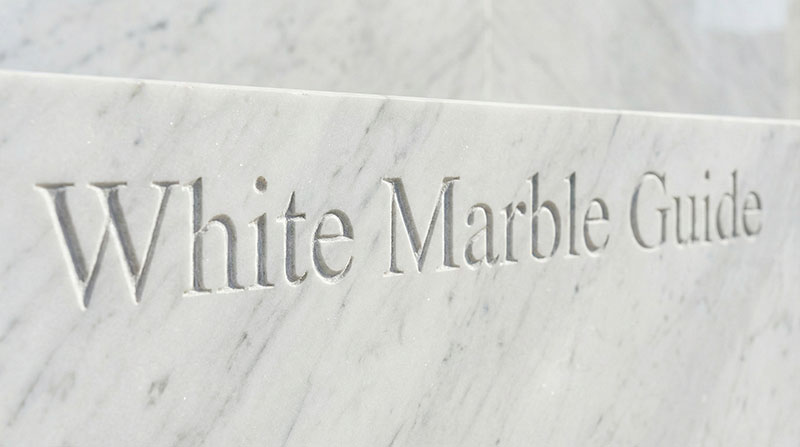
White marble has been used for centuries in architecture and interior design and remains one of the most specified natural stone materials for high-end residential and commercial projects. Today, white marble slabs are widely selected by architects, interior designers, developers, and contractors for flooring, wall cladding, countertops, and feature surfaces.
From classic Italian marbles such as Carrara and Calacatta to premium statement stones like Statuario and Thassos, white marble offers a wide range of visual styles and performance characteristics. Understanding these differences is essential when selecting white marble for architectural, hospitality, and residential developments, where long-term appearance, material consistency, and technical suitability matter as much as aesthetics.
What Is White Marble
White marble is a natural metamorphic stone formed when limestone is subjected to high heat and pressure over millions of years. During this process, calcite crystals recrystallize, creating the dense yet elegant structure marble is known for.
The white background typically comes from pure calcite, while grey, gold, or darker veining is caused by mineral impurities such as graphite, quartz, or iron oxides.
Key characteristics of white marble include:
Natural crystalline structure
Unique veining patterns
Light-reflective surface
Timeless visual appeal
Because marble is a natural stone, no two slabs are identical, which is part of its value — and also why informed selection is essential.
White Marble Slabs for Commercial & Residential Projects
White marble is most commonly supplied in slab form for architectural and interior applications. Compared to tile formats, white marble slabs allow for greater design flexibility, improved visual continuity, and precise cut-to-size fabrication.
For B2B buyers, white marble slabs are typically evaluated based on:
Slab size and usable yield
Thickness availability for different applications
Veining consistency across batches
Finish options such as polished or honed
Suitability for large-scale residential or commercial projects
Architects and developers often review actual slab images before final selection, especially for feature walls, countertops, and open-plan spaces where veining continuity plays a critical design role.
Why White Marble Remains a Premium Material
Despite the rise of engineered and synthetic surfaces, white marble continues to be specified for high-end projects due to:
Timeless aesthetics — never trend-dependent
Material authenticity — natural, geological origin
Design flexibility — suits classical and modern styles
Value perception — associated with quality and permanence
In commercial and residential developments, white marble is often used selectively to elevate key spaces and reinforce a project’s architectural language.
Types of White Marble
Understanding the different types of white marble is the foundation of correct material selection. Each type has distinct visual and technical characteristics.
Carrara White Marble
Carrara White marble is one of the most widely supplied white marbles for large-scale residential and commercial developments. Quarried in Italy, it features a soft white to light grey background with fine, consistent veining.
Due to its availability and visual stability, Carrara White is frequently specified by contractors and developers for flooring, wall cladding, and bathroom applications where material consistency and project scalability are important.
Calacatta White Marble
Calacatta marble represents the premium segment of Italian white marble, known for its brighter background and bold, expressive veining. It is commonly specified for luxury residential, hospitality, and statement commercial interiors.
Different Calacatta varieties offer varying levels of contrast and movement, allowing architects and designers to select materials based on design intent and project positioning.
Common Calacatta sub-types include:
Calacatta Gold
Recognized by elegant grey veining accented with warm gold tones, Calacatta Gold is widely used for luxury kitchens and bathrooms.
Calacatta Borghini
Calacatta Borghini offers refined, balanced veining and is frequently selected for high-end residential and hospitality projects.
Calacatta Vagli
Known for larger-scale, dramatic veining, Calacatta Vagli is ideal for feature walls and architectural focal points.
Calacatta Michelangelo
One of the most exclusive Calacatta varieties, Michelangelo features a bright white background with powerful, sculptural veining and is specified for landmark projects.
Statuario White Marble
Statuario marble is a rare Italian white marble prized for its dramatic contrast and artistic veining. Historically used for sculpture, it remains a premium choice for statement interiors.
Thassos White Marble
Thassos White marble is quarried in Greece and is recognized for its exceptionally clean white appearance with minimal veining. It is often selected for modern architectural projects where a uniform, light-reflective surface is required.
Due to its visual purity, Thassos White is commonly used in luxury bathrooms, minimalist interiors, and commercial spaces seeking a bright, contemporary aesthetic.
How to Choose the Right White Marble
Selecting white marble is not only about appearance. The following factors should guide the decision-making process.
1. Visual Style & Veining
Subtle veining → Carrara, Ariston
Bold movement → Calacatta, Statuario
Pure white → Thassos
2. Application Type
Flooring: consistency and slip resistance
Countertops: sealing and maintenance planning
Feature walls: slab layout and bookmatching
3. Project Scale
Large projects require:
Batch consistency
Slab approval
Advance production planning
4. Maintenance Expectations
White marble requires:
Proper sealing
pH-neutral cleaning
Awareness of acid sensitivity
White Marble Specification Considerations for Projects
When specifying white marble for a project, appearance alone should not be the only consideration. Technical and logistical factors play a critical role in long-term performance and installation success.
Key specification considerations include:
Slab thickness tolerance and structural requirements
Surface finish performance in different environments
Sealing and maintenance planning
Quantity control and batch consistency
Export packing and delivery coordination for international projects
Working with an experienced white marble supplier allows project teams to evaluate material suitability early, reduce installation risks, and ensure alignment with design and construction schedules.
White Marble Applications
White Marble Flooring
Provides brightness and visual continuity. Honed finishes are often preferred for slip resistance.
White Marble Countertops
Widely used in luxury kitchens and islands. Requires sealing and regular maintenance.
White Marble Bathrooms
Ideal for walls, vanities, and shower areas when properly detailed.
Feature Walls & Staircases
Calacatta and Statuario marbles are often bookmatched for dramatic architectural effects.
White Marble for Commercial Interiors
White marble is frequently specified for hotels, residential lobbies, retail spaces, and high-end commercial interiors. In these applications, material selection focuses on durability, finish performance, and long-term visual aging.
Honed finishes are often preferred in commercial flooring applications, while polished finishes are commonly used for vertical surfaces and feature elements.
White Marble Maintenance & Durability
White marble is durable but not maintenance-free. Key considerations include:
Sealing before and after installation
Avoiding acidic substances
Routine cleaning with neutral products
With correct care, white marble can maintain its appearance for decades.
White Marble vs Other White Surfaces
White Marble vs Porcelain
Porcelain offers consistency and low maintenance, while marble offers authenticity and depth.
White Marble vs Quartz
Quartz is engineered and uniform; marble is natural and expressive.
White Marble vs Granite
Granite is harder and darker; marble offers softer aesthetics and classical appeal.
Frequently Asked Questions
Is white marble expensive?
Costs vary widely depending on type, origin, and rarity.
Does white marble stain easily?
Proper sealing significantly reduces staining risk.
Which white marble is best for kitchens?
Calacatta and Carrara are commonly specified with correct sealing.
Is white marble suitable for commercial projects?
Yes, when selected and maintained correctly.
Final Thoughts
White marble is not a single material, but a category of stones with diverse characteristics. Understanding these differences ensures the right marble is specified for the right application, balancing aesthetics, performance, and long-term value.
Sourcing White Marble for Your Project
White marble is available in a wide range of types and qualities, and selecting the right material often depends on project scale, design intent, and technical requirements.
Working with an experienced white marble supplier allows architects, designers, and developers to review slab options, evaluate consistency, and plan quantities before fabrication.
Post time: Feb-06-2026