



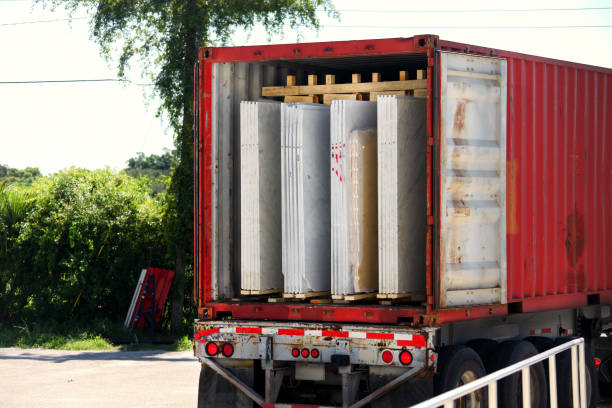
Introduction
For many buyers, the biggest concern isn’t the price of marble—it’s what happens after the order is placed.
“Will the material arrive in good condition?”
It’s a valid concern.
Marble is heavy, fragile at the edges, and often shipped over long distances. If something goes wrong during transport, the impact is immediate:
broken slabs
chipped edges
unusable material
delays on site
And in larger projects, even a small percentage of damage can quickly become a serious issue.
So the real question is:
Why do marble shipments get damaged—and how can it be avoided?
Where Damage Actually Happens
Many assume damage occurs during shipping at sea.
In reality, most issues happen earlier—during handling and preparation.
From what we’ve seen, damage usually occurs in three stages:
during loading at the factory
while being moved between locations
or due to insufficient protection inside the crate
The Most Common Causes of Damage
Weak or inconsistent packaging
This is the leading cause.
If crates are not properly reinforced:
slabs can shift during transport
pressure builds up inside the crate
edges begin to crack or chip
In some cases, the external crate looks fine—but the contents are damaged.
Lack of internal protection
Even with a strong crate, poor internal packing can cause problems.
Without proper separation:
slabs rub against each other
vibration during transport causes micro-damage
small chips become visible after unpacking
Improper loading and handling
Marble requires careful handling at every stage.
Damage often happens when:
forklifts are used incorrectly
crates are tilted or dropped
weight is unevenly distributed
These issues are not always visible immediately—but they show up later.
Long-distance transport without stabilization
For international shipments:
containers experience constant vibration
temperature and humidity can fluctuate
If slabs are not tightly secured:
movement inside the crate increases risk
What Proper Packaging Actually Looks Like
This is where reliable supply makes a difference.
Good packaging is not just about using wood crates—it’s about how those crates are built and used.
Reinforced wooden crates
thick, durable wood
structurally stable under weight
designed for stacking and long-distance transport
Internal slab protection
separators between slabs
protective film or foam
edge protection where needed
Tight packing and fixation
slabs positioned to minimize movement
internal supports to hold weight evenly
no empty space that allows shifting
From experience, the difference between basic and well-managed packaging is often the difference between a smooth delivery and a costly problem.
Why Some Shipments Still Fail
Even with decent materials, issues can still occur if the process is inconsistent.
Common situations include:
packaging outsourced without quality control
last-minute changes before shipment
mixing slabs of different sizes in the same crate
In many cases, the problem isn’t one major mistake—it’s several small oversights adding up.
A More Reliable Approach
For projects where timing and consistency matter, a more controlled approach is usually taken.
This typically includes:
checking packaging before shipment
ensuring slabs are grouped and packed correctly
confirming crate structure and internal protection
In some cases, buyers also request:
photos or videos of packing
confirmation before container sealing
From what we’ve seen, this level of visibility significantly reduces risk.
A Practical Perspective
In real projects, damage is rarely about bad luck.
It’s usually the result of:
insufficient packaging
lack of process control
or poor coordination between stages
The good news is that all of these are preventable.
Final Thought
Marble will always require careful handling—but damage is not something that has to be accepted as part of the process.
With the right packaging methods and proper control before shipment, the risk can be reduced to a very manageable level.
If You’re Planning a Shipment
If your project involves long-distance transport, it’s worth looking beyond just the material itself.
Understanding how the material is packed and handled can make a significant difference once it arrives on site.
If needed, you can review packaging methods or request shipment details in advance—this often provides more clarity than price alone.
Post time: Apr-11-2026