



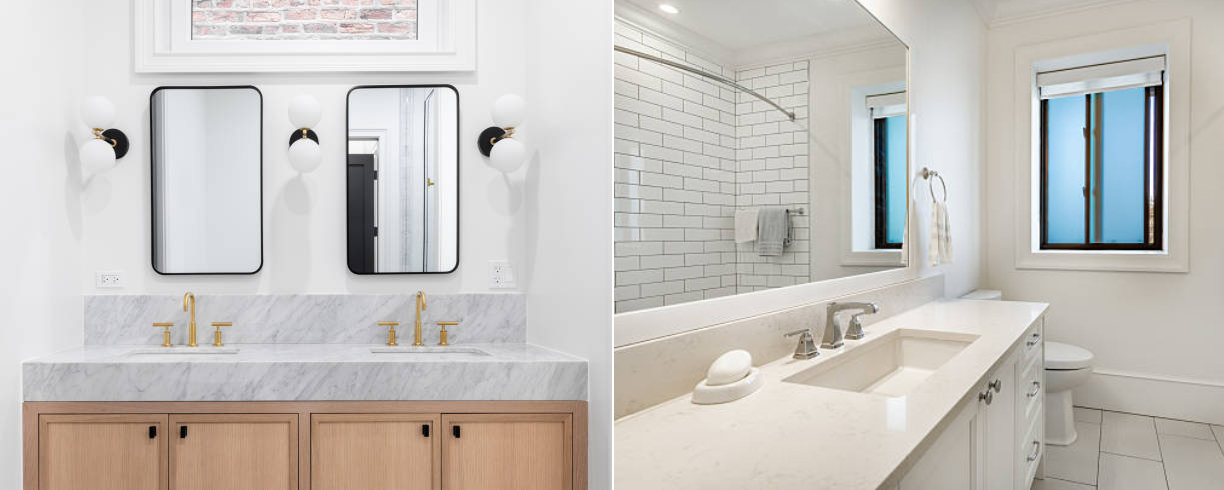
White marble continues to be one of the most sought-after materials for bathroom vanities and premium interior projects because of its timeless appearance, natural veining, and ability to elevate both modern and classic spaces. However, selecting the stone itself is only part of the decision-making process. The surface finish can significantly affect appearance, maintenance requirements, and long-term performance. When comparing polished vs honed white marble bathroom countertops, factors such as reflectivity, water spot visibility, etching resistance, and daily wear become especially important. Understanding the difference between polished and honed marble countertops helps architects, fabricators, contractors, and project planners choose the right solution for specific bathroom environments. This guide explores marble bathroom countertop finishes, compares performance characteristics, and examines how each finish influences aesthetics, durability, and functionality in real-world applications.
Difference Between Polished and Honed Marble Countertops
Understanding the difference between polished and honed marble countertops is essential when selecting surface finishes for bathroom projects, hospitality spaces, and premium residential applications. Although both options use the same natural stone material, the finishing process creates significant distinctions in appearance, texture, maintenance behavior, and long-term performance. When evaluating polished vs honed white marble bathroom countertops, the finish often influences daily usability just as much as the marble type itself.
Surface Appearance Comparison
One of the most noticeable polished and honed marble countertop differences is visual appearance. A polished finish undergoes additional grinding and buffing to create a glossy, highly reflective surface. This process enhances color depth and emphasizes natural veining patterns, making white marble appear brighter and more dramatic. For projects seeking luxury aesthetics, polished surfaces often create a stronger visual statement.
A honed finish, by contrast, stops short of high-gloss polishing and produces a smooth matte or satin-like surface. The softer appearance creates a more understated look commonly used in contemporary and organic interior designs. In discussions around matte vs glossy marble countertops for bathrooms, honed marble is often associated with minimalist and spa-inspired environments, while polished marble is frequently specified for upscale, hotel-style spaces.
For teams evaluating white marble countertop polished or honed options, the choice often depends on design objectives. Polished surfaces maximize visual impact, while honed finishes prioritize a softer and more natural appearance.
Texture and Touch
Beyond appearance, surface feel creates another important distinction in any honed marble vs polished marble comparison. Polished marble surfaces feel extremely smooth and slick because the stone pores are compressed during the finishing process. This treatment creates a refined surface that highlights light reflection and color intensity.
Honed marble maintains a softer texture with less reflectivity. Although still smooth, it typically has a more natural feel and less glass-like slickness. For honed vs polished marble bathroom vanity tops, tactile experience can influence the perceived comfort and character of the space.
Reflection and Spatial Effect
Light interaction is another major factor in marble bathroom countertop finishes. Polished marble reflects natural and artificial light more efficiently, helping brighten interiors and create a more spacious feeling. This characteristic can benefit compact bathroom designs where additional brightness is desirable.
Honed surfaces absorb more light and reduce glare. As a result, they create a quieter visual effect and softer atmosphere. In many polished marble or honed marble for modern bathrooms discussions, designers choose honed finishes to support contemporary and minimalist environments.
Everyday Performance Differences
The finish also influences how the stone behaves under regular use. In many polished marble vs honed marble pros and cons evaluations, polished surfaces are noted for offering greater stain resistance because the denser finish slows surface absorption. However, scratches, water spots, and acidic etching may become more visible because light reflects strongly across glossy surfaces.
Honed finishes may show fewer visible scratches and conceal etching more effectively due to their matte appearance. This is one reason some commercial projects and high-use installations favor honed surfaces despite requiring careful sealing and maintenance.
Ultimately, selecting between polished vs honed white marble bathroom countertops is not simply a visual decision. Performance expectations, maintenance strategy, traffic level, and project design goals all play a role. Understanding these polished and honed marble countertop differences allows architects, fabricators, and project teams to align material specifications with long-term project requirements.
Polished Marble vs Honed Marble Pros and Cons
When evaluating polished vs honed white marble bathroom countertops, appearance alone should not determine the final specification. Surface finish affects stain visibility, maintenance requirements, wear patterns, and long-term project performance. A detailed honed marble vs polished marble comparison helps architects, contractors, and material buyers understand how each finish performs under real bathroom conditions. While both finishes can be used successfully, their advantages and limitations differ significantly.
Advantages of Polished Marble
Polished marble is recognized for its glossy, mirror-like appearance that enhances the natural beauty of stone. During the finishing process, the surface is refined to a high shine, creating stronger color depth and more dramatic veining contrast.
Key advantages include:
- Enhanced visual impact: Polished surfaces intensify natural veining and create a premium, luxurious appearance. This is especially noticeable in luxury white marble materials where bold patterns are a major design feature.
- Improved light reflection: In discussions around polished marble or honed marble for modern bathrooms, polished surfaces are often selected because they reflect both natural and artificial light, making bathrooms appear brighter and more spacious.
- Greater surface density: The finishing process closes microscopic surface pores, which can improve resistance to short-term moisture absorption and staining.
- Strong compatibility with upscale design themes: Hotel-inspired interiors, contemporary spaces, and premium residential projects frequently specify polished finishes.
For many white marble countertop polished or honed evaluations, polished marble remains the preferred choice when aesthetics and visual impact are the primary objectives.
Disadvantages of Polished Marble
Although polished marble offers dramatic appearance benefits, it also introduces several practical considerations.
Common limitations include:
- Etching becomes more visible: Acidic substances found in toothpaste, cosmetics, and skincare products can leave dull spots that are easier to detect on glossy surfaces.
- Water spot visibility: Questions such as does polished marble show water spots are common because reflective finishes tend to reveal residue more easily, especially in hard-water environments.
- Scratches can stand out: Surface imperfections may become more noticeable because light reflects directly across the polished finish.
- Requires regular maintenance: Ongoing cleaning and polished marble bathroom countertop maintenance are important for preserving appearance.
These factors frequently appear in polished marble vs honed marble pros and cons discussions for high-use bathroom environments.
Advantages of Honed Marble
Honed marble offers a softer matte appearance that supports more understated and contemporary interiors. Instead of emphasizing reflectivity, the finish creates a smooth, low-sheen surface.
Benefits include:
- Conceals wear more effectively: In many polished and honed marble countertop differences comparisons, honed finishes are preferred because they hide scratches and etching more successfully.
- Lower glare: In debates around matte vs glossy marble countertops for bathrooms, honed surfaces create a calmer visual effect with less reflection.
- Supports modern design styles: Projects featuring honed white marble bathroom design ideas, spa-inspired environments, and minimalist spaces often favor honed finishes.
- Natural appearance: The softer finish creates a more subtle and organic visual character.
As a result, many designers specify modern bathrooms with honed white marble for contemporary projects.
Disadvantages of Honed Marble
Despite its design flexibility, honed marble also presents several maintenance considerations.
Potential drawbacks include:
- Surface staining can occur more easily: Questions such as does honed marble stain more easily arise because the matte finish may allow contaminants to become more noticeable without proper sealing.
- Requires routine sealing: Consistent maintenance remains important to preserve appearance and protect the stone surface.
- Less dramatic visual depth: Compared with polished surfaces, veining and color contrast often appear softer.
- Additional care requirements: Following proper honed marble countertop maintenance tips helps reduce staining and extend surface performance.
Ultimately, selecting honed vs polished marble bathroom vanity tops depends on project priorities. Polished finishes excel in visual richness and luxury appeal, while honed surfaces often perform better in concealing everyday wear and supporting contemporary design aesthetics. Understanding these polished and honed marble countertop differences allows project teams to align aesthetics with practical performance requirements.
Bathroom Performance: Which Finish Works Better?
When comparing polished vs honed white marble bathroom countertops, appearance is only one part of the selection process. Bathrooms expose natural stone surfaces to conditions that differ substantially from kitchens and living spaces. Daily contact with water, steam, cosmetics, soap residue, toothpaste, and humidity can affect how marble ages and performs over time. For architects, contractors, and project planners evaluating marble bathroom countertop finishes, understanding real-world bathroom behavior is essential.
A complete honed marble vs polished marble comparison should consider not only aesthetics, but also how surfaces react to moisture, staining, wear, and maintenance demands.
Does Polished Marble Show Water Spots?
One of the most common questions surrounding glossy marble surfaces is: does polished marble show water spots? In many cases, the answer is yes.
Polished marble reflects light strongly due to its glossy finish. While this characteristic creates visual depth and enhances veining, it can also make surface residue more visible. Water droplets that dry on the countertop may leave mineral deposits, especially in regions with hard water. Soap splashes, skincare products, and toothpaste residue can also become easier to notice on highly reflective surfaces.
For honed vs polished marble bathroom vanity tops, this issue becomes particularly relevant in high-use family bathrooms or hospitality environments where surfaces experience frequent exposure throughout the day.
Common visibility concerns with polished marble include:
- Water spots and mineral residue
- Fingerprints and cosmetic smudges
- Toothpaste splatter
- Soap buildup near sinks
- Surface streaking under direct lighting
This does not necessarily make polished marble unsuitable. Instead, it means polished marble bathroom countertop maintenance often requires more frequent wiping to preserve a clean appearance.
Does Honed Marble Stain More Easily?
Another frequently asked question is: does honed marble stain more easily?
Honed surfaces have a matte finish that diffuses light rather than reflecting it. Because of this softer finish profile, some people assume honed marble is automatically more resistant to everyday marks. However, the reality is more nuanced.
The honing process creates a surface that can sometimes appear more porous than polished marble. Without proper sealing, liquids from cosmetics, oils, skincare products, and colored substances may absorb into the stone more readily.
However, visibility differs from actual performance. In many polished marble vs honed marble pros and cons discussions, honed marble receives favorable attention because stains, scratches, and etching often blend more naturally into the surface texture.
Proper care remains essential. Following recommended honed marble countertop maintenance tips can significantly reduce staining concerns.
Important maintenance practices include:
- Applying quality sealers regularly
- Cleaning spills quickly
- Avoiding acidic cleaners
- Using stone-safe maintenance products
- Keeping standing water off surfaces
Which Marble Finish Hides Etching Better?
Etching is another critical consideration in any difference between polished and honed marble countertops discussion. Marble contains calcium carbonate, which reacts with acidic materials. In bathrooms, these substances can include:
- Toothpaste
- Facial cleansers
- Beauty products
- Hair products
- Certain soaps and cleaners
When acids contact marble, they can create dull spots known as etching.
Among all polished and honed marble countertop differences, etching visibility often becomes one of the strongest reasons project teams choose honed finishes. On polished marble, the glossy surface creates strong light reflection; even minor etching can interrupt this reflection and become highly noticeable.
Honed surfaces distribute light more evenly and typically conceal etching more effectively. This characteristic explains why many designers and fabricators specify honed finishes in heavily used spaces.
For projects debating white marble countertop polished or honed, understanding expected traffic and maintenance conditions becomes important.
Moisture, Steam, and Long-Term Bathroom Conditions
Bathrooms create a unique environment that combines high humidity with repetitive daily use. Over time, moisture exposure can affect surface appearance if maintenance routines are neglected.
When assessing natural stone bathroom countertops, several performance considerations should be evaluated:
Polished marble may offer:
- Stronger moisture resistance at the surface level
- Greater brightness in compact bathrooms
- Enhanced visual depth
Honed marble may provide:
- Better concealment of daily wear
- Softer appearance under changing light conditions
- Lower visibility of scratches and etching
For projects focused on modern bathroom with honed white marble concepts or spa bathroom with honed marble countertops, the reduced visibility of wear often becomes a practical advantage.
Ultimately, no single finish universally performs better. The answer depends on project goals, traffic levels, maintenance expectations, and design intent. In many polished marble or honed marble for modern bathrooms evaluations, polished surfaces prioritize visual drama, while honed finishes often provide a balance between aesthetics and everyday functionality. Understanding these marble bathroom countertop finishes helps ensure long-term performance aligns with project requirements.
Marble Bathroom Countertop Maintenance Guide
Proper care plays a major role in the long-term performance of polished vs honed white marble bathroom countertops. While both finishes are made from the same natural stone, their surface behavior differs, meaning maintenance routines must be tailored accordingly. A well-structured approach to cleaning and sealing helps preserve both appearance and durability in real-world bathroom environments.
When evaluating marble bathroom countertop finishes, maintenance is often one of the most important deciding factors for architects, fabricators, and project planners.
Polished Marble Bathroom Countertop Maintenance
Maintaining polished marble focuses primarily on preserving its glossy appearance and preventing surface dullness. Because polished stone reflects light strongly, small marks and residue can become more noticeable, making consistent upkeep essential.
Key practices for polished marble bathroom countertop maintenance include:
- Daily gentle cleaning: Use a soft microfiber cloth with pH-neutral stone cleaner to remove water spots, soap residue, and cosmetic buildup
- Immediate spill removal: Prevent staining from toothpaste, skincare products, and hair products by wiping surfaces quickly
- Avoid acidic cleaners: Products containing vinegar, lemon, or harsh chemicals can accelerate etching
- Regular sealing: Helps maintain resistance to moisture and supports long-term surface protection
- Dry buffing: Light polishing with a dry cloth helps restore shine and reduce visible streaks
In polished marble vs honed marble pros and cons comparisons, polished surfaces are often considered easier to wipe clean but more sensitive to visible etching and water spotting.
Honed Marble Countertop Maintenance Tips
Honed marble requires a slightly different maintenance approach due to its matte surface and softer light reflection. While it may conceal wear better, it still requires proper sealing and cleaning to prevent absorption of liquids.
Effective honed marble countertop maintenance tips include:
- Frequent light cleaning: Wipe with a damp cloth and pH-neutral cleaner to remove soap, cosmetics, and daily residue
- Prompt stain control: Address spills from skincare products, oils, or colored liquids quickly to avoid absorption
- Consistent sealing schedule: Essential to protect against moisture penetration in high-humidity bathrooms
- Avoid abrasive pads: Rough scrubbing tools can alter the uniform matte finish
- Use stone-safe products only: Prevent surface dulling or uneven sheen
In many honed marble vs polished marble comparison scenarios, honed finishes are preferred in high-traffic or high-use environments because they tend to disguise minor scratches and etching more effectively.
Cleaning Methods for Bathroom Environments
Bathroom conditions introduce unique cleaning challenges compared to other spaces. When working with white marble vanity tops, common contaminants include soap film, toothpaste splatter, skincare oils, and hard-water deposits.
Recommended cleaning approach:
- Use mild, non-acidic stone cleaners only
- Avoid bleach and ammonia-based products
- Wipe sinks and surrounding surfaces daily to prevent buildup
- Use soft cloths rather than abrasive sponges
- Dry surfaces after heavy water exposure to reduce spotting
These practices apply across both honed vs polished marble bathroom vanity tops, although polished surfaces may require more frequent wiping to maintain a streak-free finish.
Maintenance Frequency and Long-Term Care
In the broader context of marble bathroom countertop finishes, maintenance frequency often depends on finish type and usage level:
- Polished marble: Requires more frequent daily cleaning to maintain shine and minimize visible water spots
- Honed marble: Requires slightly less frequent visible cleaning but still needs regular sealing to maintain protection
For both finishes, long-term care includes periodic professional inspection in high-end residential or commercial projects, especially where natural stone bathroom countertops are used extensively.
Maintenance Impact on Finish Selection
Understanding maintenance expectations is essential when choosing between white marble countertop polished or honed options. While polished marble offers a high-end, reflective finish, it demands consistent attention to preserve its appearance. Honed marble, on the other hand, offers a more forgiving surface visually but still requires proper sealing and care to prevent long-term staining.
Ultimately, selecting between polished vs honed white marble bathroom countertops should balance design intent with realistic maintenance capacity. Aligning finish choice with expected usage ensures better long-term performance and appearance retention in any bathroom environment.
Design Applications and Style Compatibility
When selecting between polished vs honed white marble bathroom countertops, design intent often becomes the deciding factor once performance and maintenance expectations are understood. Both finishes work with high-end natural stone, but they create distinctly different visual languages in bathroom environments. Evaluating marble bathroom countertop finishes in the context of interior style helps ensure the material supports the overall architectural direction rather than competing with it.
Honed White Marble Bathroom Design Ideas
Honed marble is widely used in contemporary interiors because its matte surface creates a calm, understated aesthetic. In many honed vs polished marble bathroom vanity tops specifications, honed finishes are selected when designers want a softer, more natural interpretation of stone.
Common applications for honed white marble bathroom design ideas include:
- Scandinavian-inspired bathrooms: Clean lines, neutral tones, and natural textures benefit from the soft, non-reflective surface of honed marble
- Spa-style interiors: In spa bathroom with honed marble countertops, the matte finish supports a relaxing, wellness-focused atmosphere
- Organic modern design: Honed stone pairs well with wood, linen textures, and muted color palettes
- Minimalist spaces: The reduced glare of honed surfaces supports simplicity and visual clarity
In many modern bathroom with honed white marble projects, the goal is not to eliminate luxury but to reinterpret it in a more subtle, tactile form. This makes honed finishes particularly effective in residential bathrooms where comfort and long-term livability are prioritized.
Polished Marble Luxury Bathroom Inspiration
Polished marble, by contrast, is strongly associated with luxury-driven design. Its reflective surface enhances veining, depth, and brightness, making it a preferred choice for statement-focused interiors.
In polished marble vs honed marble pros and cons discussions related to aesthetics, polished finishes consistently stand out for their visual impact and high-end appeal.
Typical applications for polished marble luxury bathroom inspiration include:
- Hotel-style bathrooms: High-gloss surfaces reinforce a premium, hospitality-inspired experience
- Contemporary luxury residences: Polished marble enhances modern architectural detailing and lighting design
- Classic and traditional interiors: The reflective finish complements ornate fixtures and detailed millwork
- High-contrast design schemes: Polished stone pairs effectively with dark cabinetry and metallic accents
In many white marble countertop polished or honed evaluations, polished finishes are selected when the objective is to emphasize elegance, brightness, and visual richness.
Matte vs Glossy Marble Countertops for Bathrooms
The contrast between matte and glossy finishes plays a central role in defining bathroom atmosphere. In matte vs glossy marble countertops for bathrooms comparisons, the decision is less about material quality and more about spatial effect.
- Glossy (polished) surfaces: Reflect light, enhance veining contrast, and create a more dramatic visual presence
- Matte (honed) surfaces: Absorb light, soften pattern intensity, and create a more subdued and natural aesthetic
This distinction is especially important in natural stone bathroom countertops, where lighting conditions significantly influence how the material is perceived throughout the day.
Polished or Honed Marble for Modern Bathrooms
When considering polished marble or honed marble for modern bathrooms, designers often evaluate how the finish interacts with surrounding materials such as tile, glass, wood, and metal fixtures.
- Polished marble works best when the design intent includes contrast, shine, and visual focal points
- Honed marble is preferred when continuity, softness, and material harmony are prioritized
In both cases, the finish directly affects how white marble vanity tops integrate into the overall composition of the space.
Luxury White Marble Countertops in Design Planning
For high-end projects using luxury white marble countertops, finish selection becomes a key specification detail. Whether using Carrara, Calacatta, or other premium stones, the surface finish determines how veining is perceived and how the countertop interacts with lighting.
In many marble bathroom countertop finishes selections:
- Polished finishes highlight dramatic veining and color variation
- Honed finishes emphasize subtlety and texture consistency
This makes finish selection an essential step in aligning material behavior with architectural intent across both residential and commercial bathroom environments.
Side-by-Side Comparison Table
To clearly evaluate polished vs honed white marble bathroom countertops, a direct comparison helps translate technical differences into practical design and performance insights. While both options use the same natural stone, their finishing processes create distinct outcomes that influence appearance, maintenance behavior, and suitability for different bathroom environments. In any marble bathroom countertop finishes selection process, this structured comparison supports faster specification decisions for architects, designers, and fabricators.
Polished vs Honed Marble Performance Comparison
| Category | Polished Marble | Honed Marble |
|---|---|---|
| Surface Appearance | High-gloss, reflective, enhances veining depth | Matte or satin finish, soft and understated |
| Overall Aesthetic Style | Luxury, hotel-inspired, high-impact visual design | Minimalist, spa-inspired, organic modern |
| Light Reflection | Strong reflection, brightens bathroom spaces | Low reflection, softens lighting effects |
| Texture / Feel | Extremely smooth, glass-like surface | Smooth but softer, natural tactile feel |
| Water Spot Visibility | More visible under lighting | Less noticeable due to matte finish |
| Etching Visibility | More obvious due to reflective surface | More forgiving, blends into surface |
| Scratch Visibility | Scratches stand out more clearly | Scratches are less noticeable |
| Stain Resistance | Generally more surface-resistant when sealed | May require more attention to sealing |
| Maintenance Level | Requires frequent wiping to maintain shine | Slightly more forgiving in daily use |
| Best Design Applications | Luxury bathrooms, contemporary high-end spaces | Modern bathrooms with honed white marble, spa-style interiors |
| Common Use Cases | Hotel bathrooms, statement vanities, upscale residences | Family bathrooms, minimalist interiors, wellness-focused spaces |
Interpretation of Key Differences
In the context of honed marble vs polished marble comparison, the table highlights that neither finish is universally superior; instead, performance depends on usage environment and design intent.
- Polished marble is best suited for projects prioritizing visual impact, brightness, and luxury presentation. It is often specified in polished marble luxury bathroom inspiration projects where aesthetics are the primary driver.
- Honed marble performs better in spaces where subtlety, wear concealment, and relaxed aesthetics are preferred, particularly in honed white marble bathroom design ideas and spa-like interiors.
Application in White Marble Selection
When working with white marble vanity tops, finish selection significantly influences how natural stone is perceived under real lighting conditions. In white marble countertop polished or honed decisions, the table above helps clarify trade-offs between visual richness and practical usability.
For example:
- Designers seeking dramatic veining contrast often prefer polished finishes.
- Projects prioritizing calm, organic environments often select honed finishes.
Final Practical Insight
In most honed vs polished marble bathroom vanity tops evaluations, the decision ultimately depends on balancing maintenance expectations with design goals. Both finishes perform well in natural stone bathroom countertops, but their long-term success depends on aligning material behavior with user lifestyle and project requirements.
Understanding these polished and honed marble countertop differences ensures more predictable performance and more intentional design outcomes across residential and commercial bathroom applications.
Frequently Asked Questions
Does honed marble stain more easily than polished marble?
In white marble countertop polished or honed comparisons, honed marble may absorb liquids slightly faster if unsealed, but proper sealing reduces staining risk significantly.
Does polished marble show water spots?
Yes. In polished vs honed white marble bathroom countertops, polished surfaces reflect light strongly, making water spots, soap residue, and mineral deposits more visible.
Which marble finish hides etching better?
In a honed marble vs polished marble comparison, honed marble hides etching better because its matte surface diffuses light and reduces visual contrast of marks.
Which is easier to maintain in bathrooms?
For marble bathroom countertop finishes, polished marble requires frequent wiping, while honed marble needs less visual upkeep but still requires regular sealing and proper cleaning care.
Can honed marble be polished later?
Yes. In honed vs polished marble bathroom vanity tops, honed marble can often be repolished by professionals, depending on stone condition and thickness.
Which finish is better for modern bathrooms?
In modern bathroom with honed white marble, honed finishes are preferred for soft, minimalist aesthetics, while polished marble suits high-end luxury and reflective designs.
Which finish lasts longer in bathrooms?
In polished marble vs honed marble pros and cons, both last similarly long when maintained properly; durability depends more on care than finish type.
What finish works best for white marble vanity tops?
For white marble vanity tops, polished enhances veining and brightness, while honed offers a softer look ideal for spa-style and contemporary bathroom interiors.
Conclusion
Choosing between polished vs honed white marble bathroom countertops ultimately comes down to balancing aesthetics, maintenance expectations, and the functional demands of the space. While both finishes use the same premium natural stone, their surface treatments create distinct experiences that influence how the material performs in real bathroom environments.
Across this honed marble vs polished marble comparison, polished finishes consistently deliver a brighter, more reflective surface that enhances veining and creates a luxurious, high-impact appearance. This makes polished marble a strong option for projects that prioritize visual drama and upscale presentation. However, it may also require more frequent maintenance, especially in relation to water spots and surface etching visibility, which are common considerations in polished marble bathroom countertop maintenance planning.
Honed finishes, by contrast, offer a softer, matte appearance that aligns well with modern bathroom with honed white marble concepts and spa-inspired interiors. In many marble bathroom countertop finishes evaluations, honed marble is valued for its ability to conceal wear, scratches, and etching more effectively, making it suitable for high-use environments or minimalist design schemes.
When reviewing white marble countertop polished or honed options, it is important to consider not only the visual outcome but also long-term usability. Factors such as humidity exposure, cleaning routines, and design intent all play a role in determining the most appropriate finish for white marble vanity tops in residential or commercial projects.
Ultimately, both finishes perform well when properly selected and maintained. Understanding these polished and honed marble countertop differences allows architects, designers, and project planners to make more informed decisions that align material performance with project goals.
If you’re planning a project and comparing honed vs polished marble bathroom vanity tops, selecting the right finish early can significantly improve both design consistency and long-term performance. Whether you’re specifying luxury white marble countertops for a high-end residential build or sourcing natural stone bathroom countertops for a commercial project, expert guidance can help you avoid costly design mismatches.
For professional consultation, material selection support, or bulk stone supply inquiries, contact your trusted marble supplier or fabrication partner to evaluate the best finish for your specific bathroom application.
Xiamen Union Century Imp. & Exp. Co., Ltd.
Address: Unit 1108, Bldg. 2, Yulong Int’l Bldg., 989 Anling Road, Huli Dist., Xiamen, Fujian, China
E-mail: steven@cnunionstone.com
Phone: 0086-13959259507
Contact: Steven
Post time: May-22-2026