



Light Wood vs Dark Wood with Grey Marble: Which Feels Better?
How Color, Light, and Material Weight Shape the Way Grey Marble Kitchens Feel
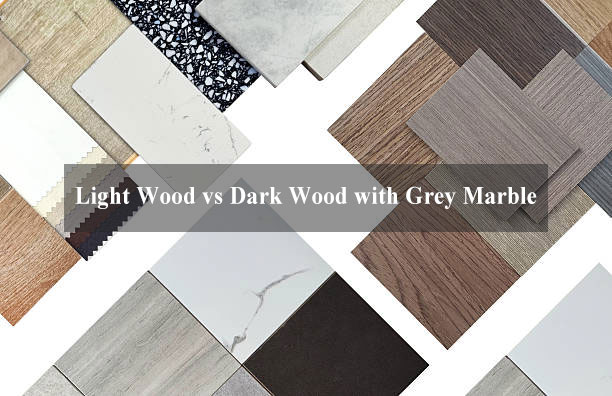
Introduction: Why This Question Matters More Than Style
Grey marble rarely fails because of the stone itself.
It fails because of what it is paired with.
Among all material decisions in a kitchen, the choice between light wood and dark wood has the biggest impact on how grey marble feels — not just how it looks, but how it lives day after day.
Homeowners are not really asking which option is more fashionable.
They are asking:
-
Will this kitchen feel warm or heavy?
-
Calm or dramatic?
-
Comfortable or visually tiring?
In 2026, the answer is no longer about trends. It is about emotional balance.
For a broader foundation on warmth in grey marble kitchens, see:
→ Warm Grey Marble Kitchen Countertops for Modern Homes
How Light Wood Changes the Feel of Grey Marble
Light wood — such as natural oak, ash, or light maple — brings openness into a grey marble kitchen.
When paired together, the effect is:
Airy rather than stark
Calm rather than minimal
Warm without becoming rustic
Light wood reflects light softly. It reduces contrast and allows grey marble to feel integrated rather than dominant.
This pairing works especially well when:
Kitchens receive good natural light
Spaces are compact or open-plan
The goal is a relaxed, modern atmosphere
Light wood does not compete with marble veining. Instead, it lets the stone read as a quiet surface rather than a statement object.
How Dark Wood Changes the Feel of Grey Marble
Dark wood — such as walnut, smoked oak, or deep-stained finishes — creates a very different emotional result.
With grey marble, dark wood introduces:
Depth
Contrast
Visual weight
When done well, the pairing feels luxurious and grounded. When done poorly, it can feel heavy or enclosed.
Dark wood works best when:
Kitchens are large and well-proportioned
Lighting is carefully controlled
Grey marble has warm undertones
Finishes are matte rather than glossy
Dark wood does not soften marble — it frames it. This can be powerful, but it requires restraint.
Emotional Temperature: Soft Warmth vs Grounded Warmth
This is where most decisions are made.
Both light wood and dark wood can feel warm — but they express warmth differently.
Light wood + grey marble
Creates soft warmth. The space feels open, easy, and quietly comfortable.
Dark wood + grey marble
Creates grounded warmth. The space feels enveloping, intimate, and architectural.
Neither is better. But each suits different lifestyles and spaces.
In 2026, more homeowners are choosing soft warmth for daily kitchens, reserving grounded warmth for statement islands or feature areas.
Light Behavior and Daily Kitchen Experience
Kitchens change throughout the day more than any other room.
Morning light is cool.
Midday light is bright.
Evening light is warm and artificial.
Light wood adapts easily to these changes. It keeps grey marble visually stable and reduces harsh contrast.
Dark wood amplifies light differences. Under strong lighting, contrast increases. Under low lighting, surfaces can feel heavier.
Finish plays a crucial role here.
Honed grey marble diffuses light and pairs naturally with both light and dark wood. Polished marble, however, increases glare — especially next to dark cabinetry.
For a deeper explanation, see:
→ Honed vs Polished Grey Marble for Kitchen Use
Maintenance and Visual Aging (What People Really Mean)
This is not about how often you clean — it’s about how clean the kitchen looks between cleaning.
Light wood + grey marble:
Dust and fingerprints are less visible
Honed finishes age quietly
Kitchens look “fine” even when not perfect
Dark wood + grey marble:
Smudges and dust show more easily
Contrast highlights wear
Requires more visual discipline
This does not make dark wood impractical. It simply means it demands intentional maintenance, not effort.
Which Feels Better for Different Homes?
There is no universal answer — but there is a right fit.
Choose light wood with grey marble if:
Your kitchen is used daily
The space is small or open-plan
You value calm and visual ease
You want warmth without heaviness
Choose dark wood with grey marble if:
Your kitchen is large and well-lit
You want depth and architectural presence
You prefer contrast and definition
You are comfortable with stronger visual weight
Both can feel beautiful. Only one will feel right for you.
Common Mistakes to Avoid with Both Pairings
Even strong material choices can fail if combined poorly.
Avoid:
Cool, blue-toned grey marble with dark wood
High-gloss marble next to heavy cabinetry
Mixing multiple wood tones in one kitchen
Overusing dark wood in limited space
In modern kitchens, restraint matters more than boldness.
Comparison at a Glance
| Factor | Light Wood + Grey Marble | Dark Wood + Grey Marble |
|---|---|---|
| Visual Weight | Light, open | Heavy, grounded |
| Warmth Type | Soft warmth | Deep warmth |
| Best For | Small or bright kitchens | Large, controlled spaces |
| Risk | Feeling too neutral | Feeling too heavy |
Conclusion: “Feels Better” Is About Context, Not Trends
In 2026, the best kitchens are not defined by dramatic contrast or minimalist purity.
They are defined by how they feel at 7 a.m. and at 9 p.m.
Light wood and dark wood both work with grey marble — when used intentionally. The difference lies in emotional temperature, light behavior, and daily experience.
Choose the pairing that supports how you live, not how a showroom looks.
For a complete foundation on warmth and material balance, revisit:
→ Warm Grey Marble Kitchen Countertops for Modern Homes
FAQ
Does grey marble work better with light or dark wood?
Both work. Light wood creates a softer feel, while dark wood creates a more grounded, dramatic atmosphere.
Is dark wood too heavy with grey marble?
It can be if the space is small or poorly lit. In large kitchens, it can feel luxurious and balanced.
Should I choose honed or polished grey marble with wood cabinets?
Honed finishes pair more naturally with both light and dark wood in modern kitchens.
Post time: Jan-20-2026