



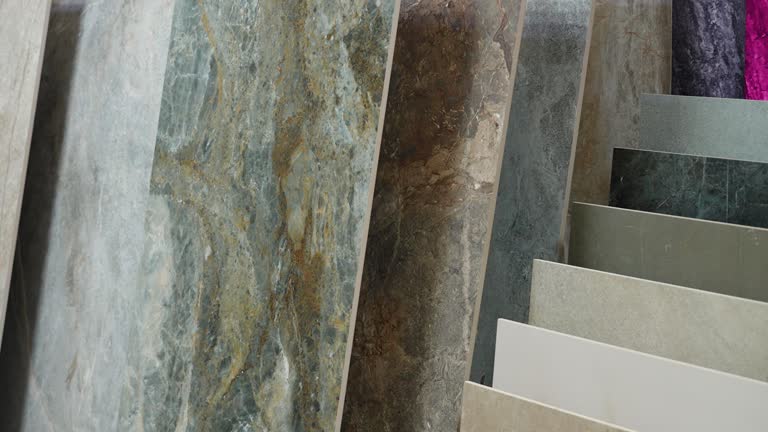
When choosing materials for luxury interiors, one of the most common questions architects, designers, and property developers ask is: green onyx marble vs porcelain slab—which is better?
Both materials are widely used in modern residential and commercial projects, but they offer very different strengths. Green onyx marble is prized for its natural beauty, translucency, and exclusivity, while porcelain slabs are valued for durability, consistency, and low maintenance.
In this article, we will compare green onyx marble and porcelain slabs in detail to help you choose the right material for your project based on aesthetics, performance, cost, and application requirements.
Quick Comparison Table
| Feature | Green Onyx Marble | Porcelain Slab |
|---|---|---|
| Appearance | Natural, unique veining, translucent | Uniform, printed natural stone effect |
| Luxury Appeal | Extremely high-end and artistic | Modern, clean, controlled look |
| Durability | Medium (softer natural stone) | Very high (engineered material) |
| Maintenance | Requires sealing and care | Very low maintenance |
| Water Resistance | Moderate | Excellent |
| Heat Resistance | Good | Excellent |
| Scratch Resistance | Lower | High |
| Backlighting | Excellent (key feature) | Not suitable |
| Cost | High | Moderate to low |
| Best Use | Feature walls, luxury interiors | Kitchens, bathrooms, high-traffic areas |
Appearance and Aesthetic Value
Green onyx marble offers a level of natural artistry that cannot be replicated. Its organic patterns, depth, and translucency create a luxurious and almost sculptural presence in interior spaces.
Porcelain slabs, on the other hand, provide controlled and consistent aesthetics. They are ideal when a clean, uniform design is required, especially in modern minimalist interiors.
In summary:
Green onyx = natural luxury and uniqueness
Porcelain slab = controlled modern elegance
Durability and Performance
When it comes to durability, porcelain slabs clearly outperform green onyx marble.
Porcelain is:
Highly resistant to scratches
Resistant to heat and moisture
Suitable for heavy daily use
Green onyx marble is:
Softer and more delicate
Susceptible to scratching and etching
Better suited for decorative rather than heavy-use surfaces
For high-traffic or functional spaces, porcelain is generally the safer choice.
Maintenance Requirements
Green onyx requires regular care:
Periodic sealing
Gentle cleaning products
Avoiding acidic substances
Porcelain slabs require minimal maintenance:
No sealing required
Easy cleaning with standard detergents
Resistant to staining and moisture absorption
For projects where low maintenance is a priority, porcelain is significantly more convenient.
Cost Comparison
Green onyx marble is typically more expensive due to:
Natural rarity
Quarry extraction limitations
Slab selection and transportation
Higher fabrication care requirements
Porcelain slabs are more cost-effective because they are:
Mass-produced
Easier to transport and install
Consistent in quality and availability
However, cost should be considered alongside design intent rather than as the only deciding factor.
Backlighting Effect
One of the biggest differences between the two materials is translucency.
Green onyx marble can be backlit, creating a dramatic glowing effect that enhances its natural patterns and depth. This makes it ideal for:
Feature walls
Luxury bars
Hotel lobbies
Statement installations
Porcelain slabs do not offer this property, which limits their use in certain high-impact design features.
Best Applications
Green Onyx Marble is best for:
Luxury feature walls
Artistic installations
Reception desks
High-end residential interiors
Boutique hotel designs
Porcelain Slabs are best for:
Kitchen countertops
Bathroom walls and floors
Commercial high-traffic areas
Outdoor cladding
Budget-conscious large projects
When to Choose Green Onyx Marble
Choose green onyx marble when your priority is:
Visual impact
Luxury expression
Unique natural patterns
Backlit design features
High-end architectural detailing
It is ideal for projects where design is more important than heavy functionality.
When to Choose Porcelain Slabs
Choose porcelain slabs when your priority is:
Durability
Low maintenance
Consistency
Cost efficiency
High-performance surfaces
It is the practical choice for everyday use environments.
Common Buyer Mistakes
Many buyers make the following mistakes when comparing these materials:
Choosing green onyx for high-traffic kitchen countertops
Expecting porcelain to replicate the depth of natural onyx under lighting
Ignoring slab variation in natural stone selection
Focusing only on price instead of application suitability
Not considering long-term maintenance requirements
Understanding these differences early helps avoid costly design or material decisions.
Frequently Asked Questions
Is green onyx marble stronger than porcelain slab?
No. Porcelain slabs are significantly stronger and more durable than green onyx marble.
Can green onyx be used in kitchens?
It can be used, but it is not recommended for heavy-use kitchen countertops due to its softness and maintenance needs.
Does porcelain look like real onyx?
High-quality porcelain can mimic onyx visually, but it cannot replicate its natural translucency and depth.
Which material is easier to maintain?
Porcelain slabs are much easier to maintain than green onyx marble.
Which is better for luxury interiors?
Green onyx marble is preferred for luxury and statement designs, while porcelain is preferred for functional luxury spaces.
Conclusion
The choice between green onyx marble and porcelain slabs depends entirely on your project goals.
If your priority is natural beauty, exclusivity, and visual impact, green onyx marble is unmatched. Its translucent glow and organic patterns make it ideal for luxury feature installations.
If your priority is durability, practicality, and low maintenance, porcelain slabs are the better option. They perform exceptionally well in kitchens, bathrooms, and high-traffic environments.
In many modern projects, the best results come from combining both materials strategically—using green onyx for statement areas and porcelain for functional surfaces.
Post time: Jun-27-2026