



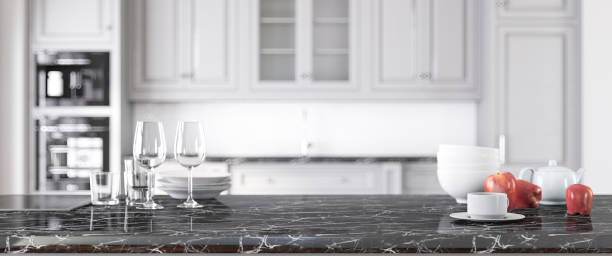
 Emperador Dark marble countertops can bring a rich brown palette and distinctive natural veining to kitchens, bathroom vanities, bars, and hospitality interiors. For designers, fabricators, contractors, and project buyers, the decision involves more than appearance. The stone’s sensitivity to acidic substances, maintenance requirements, natural variation, and fabrication constraints all affect whether it is appropriate for a particular project.
The key is to match the material to the intended use and the owner’s expectations. This guide examines the advantages and limitations of Emperador Dark marble countertops, explains the decisions that matter before fabrication, and outlines practical care considerations.
For the broader purchasing process—including slab inspection, specification review, and supplier evaluation—see our Emperador Dark Marble Slab Buying Guide.
Is Emperador Dark Marble Right for Your Countertop Project?
Emperador Dark is commonly associated with a dark brown background and lighter natural veining. The appearance of individual slabs varies, so the actual material should be reviewed before the design is finalized.
Start by considering three factors.
The intended setting. A bathroom vanity, decorative bar, and frequently used kitchen countertop have different exposure patterns. Consider contact with water, cosmetics, acidic foods, oils, cleaning products, and frequent handling.
The design objective. If the project calls for a natural pattern and a warm, dark color palette, Emperador Dark may be worth considering. If the design requires highly uniform color or precise pattern repetition, slab selection and layout become especially important.
The maintenance expectation. Marble can develop etching, scratches, and stains during normal use. Some owners accept these changes as part of the material’s character; others expect the surface to remain visually unchanged. Establish that expectation before approval.
The most appropriate choice is the one that balances the intended appearance with realistic performance and maintenance requirements.
The Advantages of Emperador Dark Marble Countertops
A warm, distinctive natural pattern
The brown background and lighter veining can complement timber cabinetry, warm metal finishes, neutral palettes, and both traditional and contemporary interiors.
For designers, the natural pattern can make a countertop or island a focal point without requiring a bright or highly contrasting color. The final effect depends on the actual slab, its finish, the lighting, and the surrounding materials.
Natural variation can support individual designs
Unlike a printed or highly uniform surface, marble has natural variations in color and pattern. These differences can give a project a distinctive appearance when the slabs are selected deliberately.
That benefit also creates a planning requirement. Designers and fabricators should review the actual material and agree on how the veins will appear across adjoining pieces. If continuity or symmetry matters, the layout should be planned before cutting.
Finish and edge details provide design flexibility
The appearance of a countertop depends on more than the stone itself. Surface finish, edge profile, slab orientation, lighting, and the surrounding cabinetry all contribute to the final result.
A polished finish provides a reflective appearance, while a honed finish offers a lower-reflection look. The right choice depends on the project’s visual objective and the owner’s expectations for surface maintenance.
Suitable for projects that value natural stone
Emperador Dark marble may suit vanities, feature islands, bars, and other designed spaces where natural variation is part of the appeal.
These are design advantages rather than guarantees of performance. The material should still be assessed for the actual application, especially where frequent contact with acidic substances or demanding maintenance conditions are expected.
The Limitations Buyers Should Consider
The main trade-off is that marble requires more careful use and maintenance than surfaces selected primarily for resistance to everyday acids and abrasion.
| Consideration | What buyers should understand | Project implication |
|---|---|---|
| Acid etching | Acidic substances can alter the surface and leave dull marks | Users need realistic expectations and suitable cleaning habits |
| Staining | Certain liquids and oils can discolor stone under suitable conditions | Prompt spill response and appropriate stain protection matter |
| Scratching and abrasion | Contact with abrasive particles or objects can mark the surface | Cutting boards and careful handling are important |
| Natural variation | Slabs may differ in tone, veining, and visible features | Review the actual selection before fabrication |
| Ongoing care | Surface appearance may change with use | Establish a realistic maintenance plan |
Etching and staining are different problems
An etch is a change to the stone’s surface caused by a chemical reaction. On marble, acidic substances such as lemon juice or vinegar can leave dull areas by reacting with the stone’s mineral composition.
A stain involves discoloration associated with a substance entering or remaining in the material. Some incidents can involve both staining and etching, but the two are not interchangeable.
This distinction matters when setting expectations and deciding how to address surface changes. Cleaning may remove residue, but it will not necessarily restore a chemically etched finish. More significant etching or surface damage may require professional stone restoration.
The Natural Stone Institute’s care and cleaning guidance explains why acidic products can damage acid-sensitive stone and recommends suitable cleaning methods.
Sealing does not make marble acid-proof
An appropriate impregnating sealer may reduce the penetration of certain liquids and improve resistance to staining. It does not make marble stain-proof, and it does not prevent acid etching.
Whether sealing is appropriate depends on the material, finish, intended use, and product instructions. Confirm the recommendation with the stone supplier or a qualified stone-care professional, and follow the sealer manufacturer’s guidance.
For additional information, consult the Natural Stone Institute’s guidance on sealing natural stone countertops.
Polished vs. Honed Emperador Dark Marble
Finish selection affects the appearance of the countertop and how certain marks may be perceived. Neither finish eliminates the material’s underlying susceptibility to damage.
| Decision factor | Polished finish | Honed finish |
|---|---|---|
| Appearance | Reflective, with a more pronounced gloss | Matte or lower-reflection appearance |
| Design effect | Can emphasize color depth and surface reflections | Can create a softer, less reflective look |
| Visibility of surface changes | Dull areas may stand out against the gloss | Some changes may be less conspicuous, depending on lighting and use |
| Selection priority | Review reflections, gloss consistency, and the actual slab | Review texture, uniformity, and cleaning expectations |
A honed finish does not prevent etching or scratching. Likewise, a polished finish is not automatically unsuitable for a countertop.
When possible, review a finish sample under lighting similar to the installation environment. Confirm that the supplier can provide the required finish for the actual material and that the approved sample reasonably represents the intended result.
Fabrication Decisions That Affect the Finished Countertop
The fabricator should review the actual slab and project drawings before cutting. Early coordination helps avoid unnecessary material loss and reduces the risk of a finished layout that differs from the design intent.
Plan the vein layout
Identify the countertop dimensions, island dimensions, adjoining pieces, and any areas where vein direction or visual continuity matters.
The fabricator should assess whether the available slab can accommodate the proposed layout. If several pieces must appear coordinated, agree on their orientation before cutting rather than relying only on a generic product photograph.
Agree on seams and edges
Seam locations depend on slab dimensions, installation geometry, access constraints, and fabrication requirements. Discuss visible seams early enough for the designer and fabricator to consider alternatives.
Edge profiles should also be confirmed before fabrication. The selected profile must be compatible with the design and the material available.
Coordinate cutouts and installation requirements
Sink openings, cooktop cutouts, faucet holes, and other penetrations should be checked against the relevant equipment specifications and installation drawings.
Support and reinforcement requirements should be determined by the responsible fabricator or installer based on the project design. A general product description is not a substitute for project-specific fabrication and installation instructions.
Approve the actual slab before processing
For visually prominent countertops, retain photographs of the selected slab and planned layout. Record the agreed finish, vein direction, and any important visual acceptance criteria.
For a complete review of dimensions, inspection records, supplier coordination, and purchasing risks, refer to the Emperador Dark Marble Slab Buying Guide.
A Practical Care Plan for Emperador Dark Marble Countertops
Care instructions should be provided before the countertop is handed over to the end user. The routine should be simple enough to follow and appropriate for the actual material and finish.
Clean spills promptly
Blot spills rather than spreading them across the surface. Clean the affected area using a suitable natural-stone cleaner or another product specifically approved for the stone, following its instructions.
Acidic substances—including citrus juice, vinegar, and tomato-based products—can etch marble. Prompt cleanup reduces contact time but cannot guarantee that etching will not occur.
Use appropriate cleaning products
Avoid acidic cleaners and abrasive products unless a qualified stone-care professional has specifically confirmed their suitability. A cleaner that is appropriate for one surface may damage another.
For routine cleaning, follow the recommendations of the stone supplier and the cleaning-product manufacturer. Rinse as directed and avoid leaving residue on the surface.
Reduce avoidable scratching and heat exposure
Use cutting boards for food preparation and coasters where appropriate. Avoid dragging abrasive objects across the countertop.
Use trivets or heat protection appropriate to the installation and manufacturer guidance rather than placing hot cookware directly on the stone. These precautions help reduce avoidable damage; they do not make the surface indestructible.
Confirm whether sealing is recommended
Ask the supplier or stone-care professional whether the particular material and finish should be sealed. If a sealer is recommended, follow its application instructions and establish a maintenance schedule based on the product and actual use conditions.
Do not assume that every marble countertop needs the same treatment or that all sealers have the same service life.
Seek professional advice for persistent damage
If dull spots, discoloration, scratches, or other surface changes persist, identify the likely cause before attempting treatment. Etching, staining, residue, and physical damage can require different approaches.
Avoid improvised chemical treatments and abrasive tools. Consult a qualified stone-care professional when the cause is unclear or the affected area is prominent.
Is Emperador Dark Marble the Right Choice?
Use the following decision framework when comparing materials for a countertop project.
| Project requirement | Decision guidance |
|---|---|
| A distinctive natural pattern and warm brown tones | Consider Emperador Dark if the actual slab meets the design brief |
| A surface expected to remain unchanged by acidic spills | Marble may not meet this expectation |
| An owner comfortable with natural variation and routine care | Marble may be appropriate after sample and application review |
| A large island or multi-section installation | Prioritize full-slab review and layout coordination |
| Limited capacity for ongoing maintenance | Discuss the trade-offs and compare alternatives before approval |
Emperador Dark marble is not automatically the right choice for every countertop, nor should it be rejected simply because it requires care. The decision depends on the project’s priorities and the owner’s willingness to accept the material’s characteristics.
Where resistance to acidic substances, minimal maintenance, or consistent surface appearance is a non-negotiable requirement, discuss alternative materials with the design team before specifying the stone.
Review Available Emperador Dark Marble Slabs
Before finalizing a countertop specification, review the actual slab selection and confirm the available finish, dimensions, thickness, and other project requirements with the supplier. Do not rely on a generic photograph or unverified specification when the finished result depends on a particular color or pattern.
Visit the Emperador Dark marble product page to review the product information and contact the supplier about current material availability, samples, and project quotations.
For broader guidance on slab selection, inspection, specifications, and supplier evaluation, return to the Emperador Dark Marble Slab Buying Guide.
Frequently Asked Questions
Are Emperador Dark marble countertops suitable for kitchens?
They can suit kitchens where the natural appearance of marble is a priority and the owner accepts the possibility of etching, staining, scratching, and ongoing care. Review the actual slab and discuss maintenance expectations before approval.
Does sealing prevent etching on marble countertops?
No. A suitable sealer may reduce the penetration of certain liquids, but it does not make marble acid-proof. Acid etching can occur even on sealed marble.
Is polished or honed Emperador Dark marble better for countertops?
Neither finish is universally better. Polished marble is more reflective, while honed marble has a lower-reflection appearance. Consider the design, lighting, expected use, and the visibility of surface changes.
How should Emperador Dark marble countertops be cleaned?
Use a suitable natural-stone cleaner according to its instructions, clean spills promptly, and avoid products that may react with the stone. Follow the supplier’s recommendations for the specific material and finish.
What should be checked before countertop fabrication?
Confirm the slab selection, dimensions, thickness, finish, piece schedule, seam locations, vein direction, cutouts, edge profiles, and installation requirements with the fabricator.
Where can I view Emperador Dark marble slabs and request pricing?
Visit the Emperador Dark marble product page to discuss available material, specifications, samples, and project quotations.
Post time: Oct-28-2026