



 For importers, kitchenware distributors, and private-label brands, selecting the right marble pastry slab size is more than a product-design decision. Dimensions and thickness influence the finished product’s weight, handling, packaging requirements, freight costs, retail positioning, and manufacturing feasibility.
A large marble pastry board may appeal to buyers looking for an expansive work surface, while a smaller format may be easier to handle, package, and incorporate into a broader kitchenware collection. Neither option is automatically more profitable. The right specification depends on the intended customer, distribution channel, production requirements, and total landed cost.
For wholesale buyers sourcing marble pastry slabs, the goal is to establish a commercially viable specification before requesting samples or committing to a production order.
Start With the Intended Product Positioning
Before selecting dimensions, define how the marble pastry slab will fit into your product range.
A large marble pastry slab may be positioned as a spacious work surface for rolling dough, pastry preparation, or other kitchen tasks. However, increasing the working area also increases the amount of stone required and can make the finished product heavier and more demanding to package and transport.
Smaller formats may suit retailers looking for products that are easier to store, display, and handle. They can also provide an alternative price point within a collection, depending on material selection, manufacturing costs, and retail positioning.
For importers and distributors, the decision should begin with the target customer and sales channel rather than simply choosing the largest available dimensions.
Consider whether the product will be sold through specialty kitchenware retailers, general homeware stores, e-commerce channels, or a private-label collection. Each channel may have different requirements for shelf presentation, packaging dimensions, handling, and delivery.
Reviewing comparable products can help establish a starting specification. Retail listings, customer reviews, product dimensions, and packaging information can provide useful reference points, but they should be treated as market signals rather than proof of wholesale demand. Actual sales data, distributor feedback, and retailer conversations provide stronger evidence when available.
How Dimensions Affect Finished Weight and Handling
The length and width of a marble pastry slab determine its working area, while thickness has a substantial effect on its weight and material consumption.
For a rectangular slab, the volume can be estimated by multiplying length by width by thickness. When dimensions are measured in consistent units, the volume can be combined with the density of the selected marble to estimate the stone’s weight.
For example, a hypothetical rectangular marble slab measuring 24 × 16 × ¾ inches has a volume of approximately 0.00315 cubic meters. Using an assumed marble density of 2,700 kg/m³, its estimated stone weight is approximately 8.5 kg (18.7 lb). This is an illustrative calculation, not a specification for any particular marble product.
Increasing the thickness to 1 inch while keeping the length and width unchanged raises the estimated stone weight to approximately 11.3 kg (24.9 lb). Actual weight depends on the selected material, finished dimensions, and product design. Accessories and packaging must be accounted for separately.
This relationship matters when comparing a standard marble pastry board with a larger custom version. Increasing both length and width expands the working surface, but it also increases the amount of stone used. Increasing thickness adds further weight without increasing the working area.
Weight affects several downstream decisions.
Handling: Buyers should consider whether the finished product can be lifted, moved, and used comfortably by the intended customer.
Packaging: Heavier products require packaging designed to protect the stone during handling and transportation.
Storage and distribution: Carton weight, pallet configuration, warehouse handling, and delivery arrangements may change with the specification.
Shipping costs: Product dimensions and gross packed weight can influence freight calculations, depending on the transport method, carrier rules, and shipment configuration.
For private-label collections, evaluate the complete packaged product rather than the bare marble slab alone. Non-slip feet, protective components, inserts, and retail packaging all contribute to the final shipping configuration.
Selecting the Right Thickness
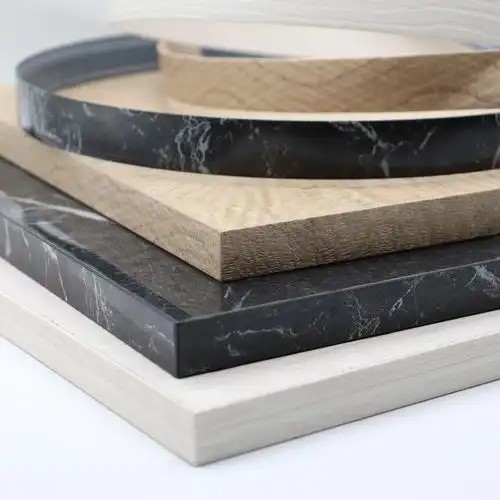
Thickness should be specified alongside length and width, not treated as a minor finishing detail.
A thicker marble pastry slab generally consumes more material and weighs more than a thinner slab of the same length and width. This can affect material yield, machining requirements, handling, packaging, and transportation costs.
However, selecting the thinnest possible specification simply to reduce weight is not necessarily the right approach. The slab must meet the intended product requirements, including appropriate rigidity, edge durability, surface finish, and performance under normal handling.
Suitability depends on the selected marble, overall dimensions, edge design, fabrication method, and intended use—not thickness alone. Buyers should ask the manufacturer to confirm which thicknesses are practical for the proposed specification.
Dimensional tolerances should also be agreed upon before production. Confirm the finished length, width, thickness, edge profile, and acceptable variation in the approved specification. These requirements should be documented rather than assumed to be universal across suppliers.
Edge treatment deserves attention as well. A polished edge, eased edge, or other specified profile can affect the finished appearance and processing requirements. The chosen profile should be clearly documented so that samples and bulk production follow the same specification.
Where a buyer is developing a new private-label product, approving a representative sample is a useful way to assess the relationship between thickness, weight, appearance, and handling before finalizing the order.
Standard Sizes or Custom Marble Pastry Slabs?
The choice between standard and custom sizes affects both product development and purchasing efficiency.
Standard Sizes for Established Product Ranges
Standard sizes can be a practical starting point for importers and distributors who want to introduce a marble pastry board without developing an entirely new specification.
An established format can simplify product comparison, sample evaluation, packaging planning, and repeat ordering. Where the manufacturer already produces a compatible size, it may also be possible to reduce setup complexity or improve material utilization. These advantages depend on the factory’s existing production arrangements and should be confirmed during quotation.
Standard sizes are particularly worth investigating when a buyer is testing a new product category or adding another item to an established kitchenware range.
However, the term standard size should not be assumed to mean that every supplier offers identical dimensions. Buyers should request actual finished measurements, thickness, tolerances, and product weight rather than relying on a general size description.
Custom Sizes for Differentiated Collections
Custom production may be more appropriate when a retailer or private-label brand needs a particular working area, visual proportion, packaging format, or product configuration.
For example, a buyer may request a larger marble pastry slab to differentiate a premium collection, or a specific rectangular format to fit an existing assortment. These are product-development decisions that should be evaluated against the intended retail positioning and the manufacturer’s production capabilities.
Custom dimensions may introduce additional setup, material-yield, cutting, inspection, or packaging considerations. Depending on the specification and order quantity, they may also affect minimum order requirements and production lead time.
Before approving a custom size, request confirmation of feasibility, estimated finished weight, available edge profiles, sample costs, minimum order quantity, and the expected production schedule.
A custom format is most useful when the differentiation has a clear commercial purpose—not simply because a different size is possible.
How to Evaluate Demand for Different Dimensions
Choosing a marble pastry slab size based on appearance alone can lead to an assortment that is difficult to sell or unnecessarily expensive to distribute.
Wholesale buyers should compare potential sizes against actual purchasing signals. Retail product listings can help identify the dimensions already offered in the market, while distributor feedback and retailer conversations can reveal preferences that search data alone may not capture.
Search terms such as large marble pastry slab, marble pastry board 24 × 16 inches, and extra-large marble pastry board can help identify how customers describe different formats. These phrases are useful for keyword and product research, but their search volumes should be validated before they are used to make inventory decisions.
It is also important to distinguish interest in a size from willingness to purchase it. A large-format product may attract attention but still face challenges related to weight, retail pricing, storage, or shipping. Conversely, a more compact product may be easier to distribute but may not provide the working area expected by the target customer.
A practical assortment evaluation should consider customer requirements, comparable products, intended retail pricing, logistics, manufacturing feasibility, and the size of the initial order commitment.
Before selecting a size, buyers should ask which dimensions are requested by target retailers, what comparable brands currently offer, and whether the proposed specification can support the intended retail price after manufacturing, packaging, and distribution costs. The finished product weight, carton dimensions, gross shipment weight, and pallet requirements should also be reviewed.
For an initial product launch, it may be sensible to compare a small number of clearly differentiated specifications rather than introducing many similar sizes at once. The final selection should be based on buyer feedback, sample assessment, and realistic cost estimates.
Packaging and Freight Must Be Considered Early
Packaging is an integral part of marble pastry slab specification because the product combines substantial weight with edges and surfaces that can be damaged during handling.
As dimensions increase, the manufacturer and buyer should reassess protective packaging, carton size, internal cushioning, edge protection, and the stability of the packed product. Packaging should be evaluated for the intended shipping route and handling conditions rather than selected solely for its appearance on a retail shelf.
Buyers should request both the net product weight and the gross packaged weight, together with the outer carton dimensions. These details help freight forwarders and logistics teams estimate shipping costs and determine suitable shipment configurations. Depending on the transport method and carrier, dimensional or volumetric weight may also affect freight charges.
For containerized shipments, the number of units that can be loaded is not determined by product count alone. Carton dimensions, palletization, loading arrangements, gross weight, and applicable transport limits all matter. A larger slab may reduce the number of units loaded into a shipment, but the actual result depends on the complete packing configuration.
Before approving a bulk order, confirm the packaging specification and evaluate whether the finished product can be protected without creating unnecessary volume or cost. Where appropriate, request a packaging sample or conduct a trial shipment to assess performance.
What Buyers Should Include in a Manufacturing Inquiry
A detailed specification makes it easier for a marble manufacturer to evaluate feasibility and prepare a meaningful quotation.
When requesting pricing for marble pastry slabs, importers and private-label buyers should provide the target length, width, thickness, preferred marble type or color, surface finish, edge profile, estimated order quantity, packaging requirements, and destination market.
If the product requires non-slip feet, branding, retail boxes, inserts, or other accessories, include those requirements in the initial inquiry. They can affect both the finished specification and the overall cost.
It is also useful to request information about sample availability, minimum order quantity, production lead time, quality inspection, and shipping arrangements. For food-contact kitchenware, buyers should identify the intended use and verify applicable material-suitability and product requirements before making compliance claims or approving the product for sale.
To compare supplier quotations fairly, ensure that each quotation covers the same material selection, dimensions, thickness, finish, tolerances, accessories, packaging configuration, and delivery terms. A lower unit price may not represent a lower total cost if the specifications or shipping arrangements differ.
A manufacturer can then assess whether the proposed dimensions are practical, estimate the finished weight, identify packaging considerations, and advise whether an existing specification or custom production is more appropriate.
Develop Your Marble Pastry Slab Specification With a Manufacturer
For importers, distributors, and private-label kitchenware brands, selecting the right marble pastry slab size requires balancing customer needs, product positioning, manufacturing feasibility, and total landed cost.
Standard sizes can provide a practical starting point, while custom dimensions may help create a differentiated product range when supported by a clear commercial objective. In either case, the specification should be evaluated as a complete finished product, including thickness, edge treatment, weight, packaging, and shipping requirements.
If you are sourcing marble pastry slabs for a wholesale or private-label collection, contact our team with your target dimensions, preferred marble selection, thickness, estimated order quantity, and packaging requirements. We can review the proposed specification and discuss manufacturing feasibility, sample options, and quotation requirements based on your project details.
Post time: Oct-24-2026