



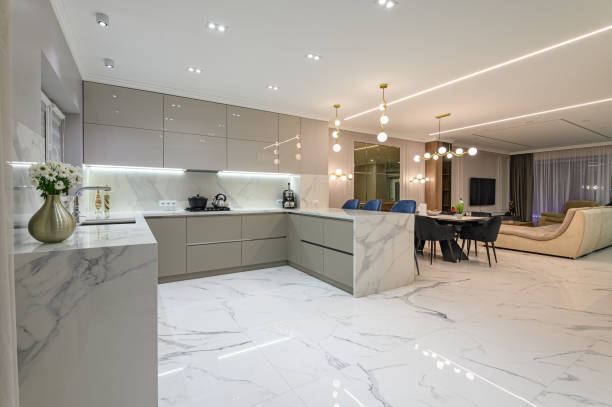
What Makes Calacatta Marble Slabs a Luxury Interior Material?
Calacatta marble has long held a position at the top of the natural stone hierarchy. It is instantly recognizable, yet never predictable. Each slab carries its own visual rhythm, shaped by nature over millions of years. The base is a bright, luminous white, often cleaner and more refined than many other white marbles. Across this surface flow bold veins in shades of gray, gold, or occasionally soft taupe, creating contrast that feels both dramatic and elegant.
Unlike uniform manufactured materials, Calacatta marble is defined by variation. No two slabs are ever the same. This individuality is one of the main reasons it is considered a luxury material. Designers and homeowners are not simply selecting a surface—they are selecting a one-of-a-kind visual composition.
Another defining characteristic is rarity. Calacatta marble is quarried in limited regions, and only a small portion of extracted stone meets the visual standards required for premium architectural use. This scarcity naturally elevates its value and desirability.
Large-format slabs are especially prized. When used at scale, the veining becomes more expressive, almost like abstract artwork. This is where Calacatta transitions from a building material into a design feature.
Its appeal is not only aesthetic. It also represents permanence. Marble has been used in architecture for centuries, from classical sculptures to historic buildings. That sense of continuity adds depth to modern interiors that use it today.
Why Calacatta Marble Countertops Remain a Popular Choice
In kitchen design, Calacatta marble countertops continue to be a symbol of refined taste. Despite the rise of engineered surfaces, many homeowners still choose marble for its natural beauty and visual warmth.
One of its strongest qualities is its ability to elevate a space instantly. Even a simple kitchen layout feels more intentional when topped with a Calacatta slab. The stone introduces movement, depth, and light reflection that cannot be replicated by synthetic materials.
Functionally, marble is a mixed performer. It is heat resistant, which makes it suitable for cooking environments. However, it is also porous and sensitive to acidic substances. This means it requires more care than quartz or porcelain alternatives.
Still, many consider these trade-offs acceptable. The appeal of authenticity often outweighs concerns about maintenance. A marble countertop develops character over time. Light etching or patina is not always seen as damage—it can be part of the stone’s evolving identity.
Another reason for its popularity is design flexibility. Calacatta marble works in both modern and traditional kitchens. It pairs effortlessly with wood cabinetry, matte black finishes, brushed metals, and minimalist white palettes.
The material also supports a wide range of layouts. Whether used in compact kitchens or expansive open-concept spaces, it maintains its visual impact without overwhelming the design.
Ultimately, Calacatta marble countertops remain relevant because they offer something that cannot be manufactured: natural artistry combined with architectural function.
Choosing Finishes and Specifications for Calacatta Countertops
Selecting Calacatta marble is not only about the slab itself. The finish and fabrication details significantly influence both appearance and performance.
Polished finishes are the most common choice. They create a reflective surface that enhances the brightness of the stone and intensifies the veining. Light bounces across the surface, giving the countertop a clean, luxurious feel. However, polished marble tends to show etching more easily.
Honed finishes, on the other hand, offer a softer, matte appearance. The surface feels more subdued and natural. While it may not have the same reflective quality, it often hides wear better, making it appealing for high-use kitchens.
Thickness is another important consideration. Standard slabs typically range from 2 cm to 3 cm. Thicker slabs create a more substantial visual presence, especially in island applications. Thinner slabs may require reinforcement depending on installation type.
Edge profiles also shape the final look. A simple eased edge feels modern and minimal. A beveled or ogee edge introduces more traditional character. These details may seem small, but they significantly influence the overall aesthetic.
Fabrication quality is critical. Precision cutting ensures clean seams, especially when multiple slabs are joined. Poor fabrication can disrupt the natural flow of veining, which is one of marble’s most important visual assets.
Careful planning at this stage ensures the countertop not only performs well but also aligns with the intended design style.
Designing Statement Kitchen Islands With Calacatta Marble
Kitchen islands have become central design elements in modern homes, and Calacatta marble is often chosen to give them a strong visual identity.
Because islands are highly visible from multiple angles, they provide the perfect surface for showcasing large slab patterns. The veining can be oriented intentionally to guide the eye across the space. This transforms the island into a sculptural focal point rather than just a functional workspace.
Waterfall edge designs are particularly popular. In this configuration, the marble continues seamlessly down the sides of the island, creating a continuous flow of stone. The effect is bold and architectural. It also highlights the natural veining in a vertical dimension, which adds depth and movement.
Large-format slabs are essential for this type of installation. Fewer seams mean a cleaner and more cohesive appearance. When executed well, the island appears carved from a single block of stone.
Bookmatching is another advanced design technique often used in luxury kitchens. Two slabs are placed side by side so that the veining mirrors itself. The result resembles an open book, creating symmetry and visual drama.
In open-concept layouts, Calacatta marble islands also help define the kitchen zone without physical barriers. They anchor the space while maintaining a sense of openness.
Lighting plays an important role as well. Natural light enhances the brightness of the stone, while under-cabinet or pendant lighting can emphasize the movement of the veins during evening hours.
Using Calacatta Marble Slabs for Feature Walls
Beyond kitchens, Calacatta marble has become a popular material for interior feature walls. Its expressive patterns make it ideal for vertical installations where visual impact is a priority.
In living rooms, marble feature walls often serve as a backdrop for seating areas or entertainment systems. The stone introduces texture and depth, preventing large walls from feeling flat or empty.
Fireplace surrounds are another common application. When Calacatta marble frames a fireplace, it creates a natural focal point. The contrast between the organic veining and the structured geometry of the fireplace enhances both elements.
Entryways also benefit from marble wall installations. First impressions matter in interior design, and a Calacatta feature wall immediately communicates sophistication and attention to detail.
One of the most striking techniques used in wall applications is bookmatching. Slabs are carefully selected and positioned so the veining mirrors itself across the surface. This creates a symmetrical pattern that feels almost artistic.
Floor-to-ceiling installations amplify this effect. When marble spans the full height of a room, it creates a sense of scale and luxury. The space feels more expansive and visually unified.
Proper lighting is essential in these applications. Directional lighting can emphasize veining depth, while softer ambient lighting creates a more subtle, elegant appearance.
How Calacatta Marble Compares to Other Surface Materials
When comparing Calacatta marble to other materials, the differences are both visual and functional.
Compared to Carrara marble, Calacatta typically has a brighter white background and more dramatic veining. Carrara tends to appear softer and more uniform, while Calacatta makes a stronger visual statement.
Quartz surfaces offer greater durability and lower maintenance. They are non-porous and resistant to staining, making them practical for busy households. However, they lack the natural variation and depth that marble provides.
Quartzite is often considered a closer natural alternative. It is more durable than marble and still offers organic patterns, but it does not always achieve the same level of bold contrast found in Calacatta slabs.
Porcelain slabs have also become popular due to their strength and versatility. While they can mimic marble visually, they do not carry the same sense of natural origin.
Ultimately, the choice comes down to priorities. Calacatta marble is selected for its aesthetic richness and uniqueness, while other materials are often chosen for performance and ease of maintenance.
Calacatta Marble Slab Pricing and Buying Considerations
The cost of Calacatta marble varies significantly depending on several factors. One of the most important is slab quality. The clarity of the white background and the intensity of veining play a major role in pricing.
Size also matters. Larger slabs are more valuable because they reduce the need for seams in installation. This is particularly important for kitchen islands and feature walls.
Origin and quarry selection can influence availability and cost. Certain quarries produce more highly sought-after variations, which naturally increases demand.
Another factor is fabrication complexity. Projects that require bookmatching or precise vein alignment often require additional planning and labor, which can affect overall cost.
When selecting slabs, it is important to view full pieces rather than small samples. Marble is highly variable, and small sections do not always represent the full visual character of the stone.
Inspection should focus on consistency, structural integrity, and how the veining flows across the slab. These details determine how the final installation will appear.
Maintaining Calacatta Marble Surfaces
Calacatta marble requires consistent but simple care to maintain its appearance over time.
Sealing is an important first step. Because marble is porous, sealing helps reduce absorption of liquids and minimizes staining risk. Re-sealing is typically recommended periodically depending on usage.
Daily cleaning should be gentle. Mild soap and water are usually sufficient. Harsh or acidic cleaners should be avoided, as they can damage the surface and dull the finish.
Spills should be cleaned promptly. Substances like wine, citrus, and coffee can leave marks if left unattended. Quick action helps preserve the surface.
Over time, natural wear may appear. Light etching or subtle changes in texture are normal characteristics of marble. Many owners appreciate this evolving patina as part of the material’s identity.
With proper care, Calacatta marble retains its elegance for decades, aging in a way that feels organic rather than deteriorative.
FAQs
Are Calacatta marble countertops durable for daily kitchen use?
Yes, they are durable enough for kitchens, but they are porous and can etch or stain if not properly sealed and maintained. Careful use helps preserve their appearance over time.
What makes Calacatta marble different from Carrara marble?
Calacatta marble has a brighter white background and bolder, more dramatic veining. Carrara is softer in contrast and more uniform, making Calacatta the more luxurious and visually striking option.
Can Calacatta marble be used for kitchen islands?
Yes, it is ideal for kitchen islands, especially with large slabs or waterfall edges. It creates a strong focal point and showcases natural veining beautifully across expansive surfaces.
Do Calacatta marble slabs require sealing?
Yes, sealing is recommended because marble is porous. Sealing helps reduce staining and moisture absorption, and should be reapplied periodically depending on usage and cleaning habits.
Is Calacatta marble suitable for feature walls?
Absolutely. It works well for feature walls, fireplaces, and entryways. Its bold veining and large slabs create a dramatic, high-end visual impact in vertical installations.
Conclusion
Calacatta marble slabs remain one of the most compelling materials in interior design. Their combination of natural artistry, bold veining, and architectural presence allows them to transform ordinary surfaces into statement features.
Whether used in countertops, kitchen islands, or feature walls, the material consistently delivers visual depth and sophistication. While it requires thoughtful maintenance, its aesthetic value continues to make it a preferred choice for high-end residential and commercial spaces.
In the right setting, Calacatta marble does more than complete a design—it defines it.
Xiamen Union Century Imp. & Exp. Co., Ltd.
Address: Unit 1108, Bldg. 2, Yulong Int’l Bldg., 989 Anling Road, Huli Dist., Xiamen, Fujian, China
E-mail: steven@cnunionstone.com
Phone: 0086-13959259507
Contact: Steven Xie
Post time: May-25-2026